Paint and Stain: How to Protect Your Virginia Home Inside and Out
Why Virginia Weather Destroys Unprotected Surfaces
Your home takes a beating in the New River Valley. Summer humidity sits above 70% for months. Winter freezes crack moisture-trapped wood. Spring rains soak into bare surfaces, and fall temperature swings expand and contract everything from siding to deck boards.
Paint and stain aren't decorative. They're the first line of defense against rot, mold, and structural damage. When they fail, water gets in. When water gets in, you're looking at replacement costs instead of maintenance costs.
Here's what actually happens when you protect your home correctly.
See Our Work
Here's a look at some of our recent painting and staining projects in the New River Valley.
Interior Painting
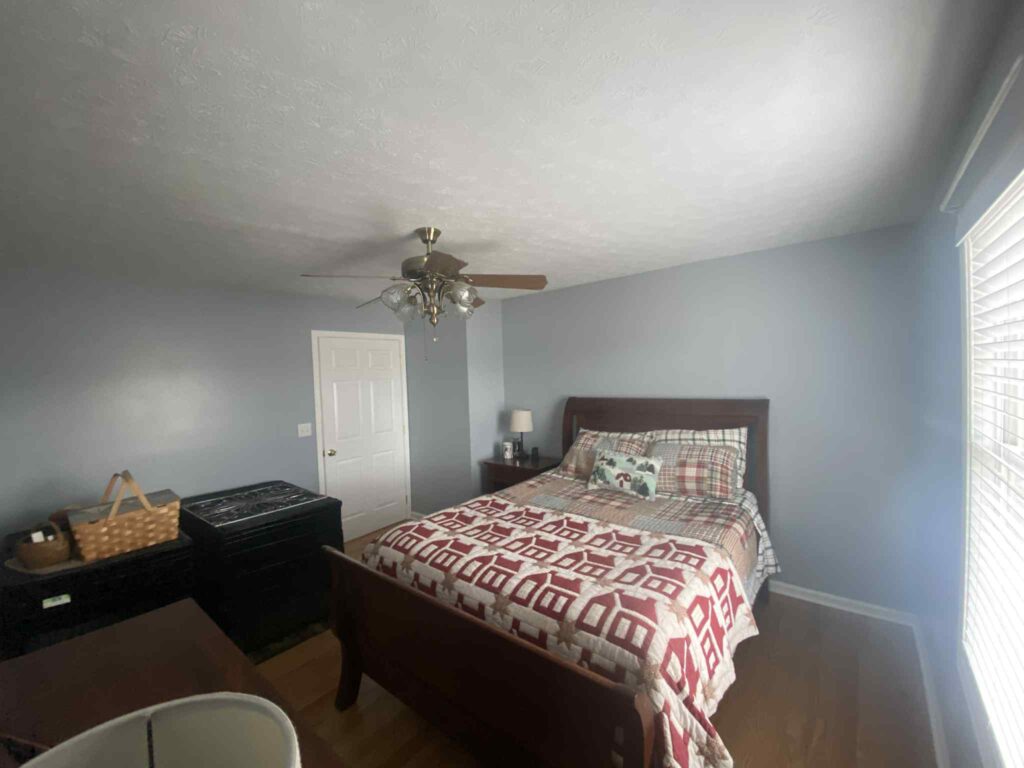
A fresh coat of paint can completely transform a room. We handle everything from walls and ceilings to trim and cabinetry.
Exterior Painting & Porch Work
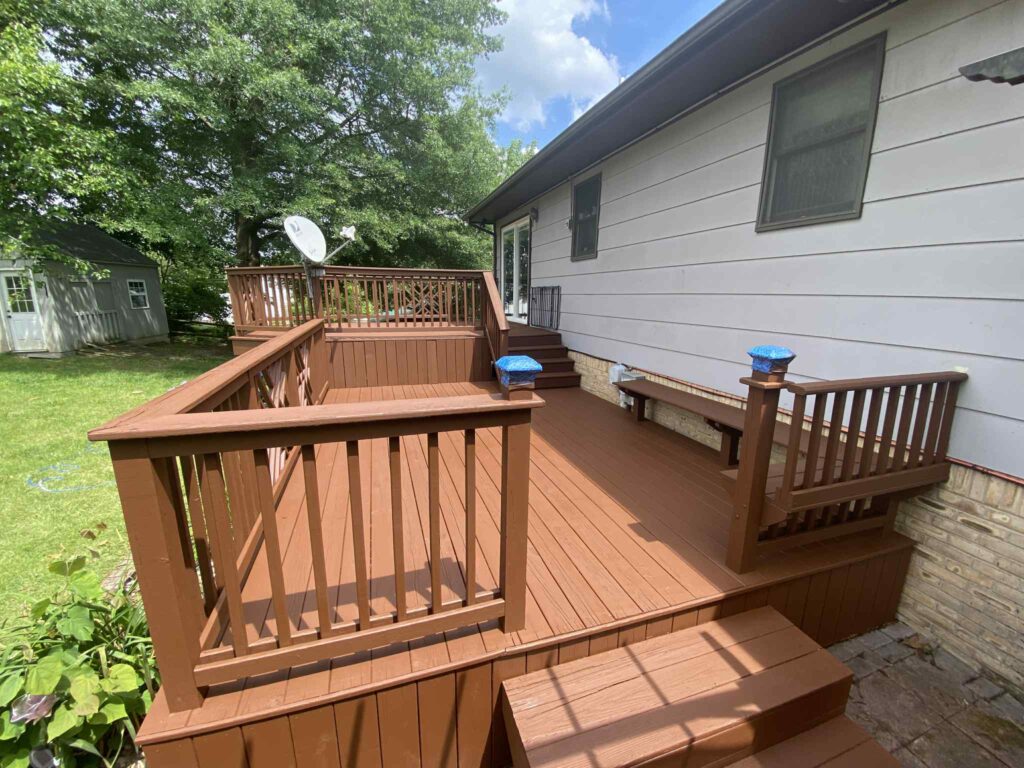
Virginia weather takes a toll on porches and siding. We use premium weather-resistant paints that hold up through humidity, rain, and temperature swings.
Deck Staining & Fence Treatment
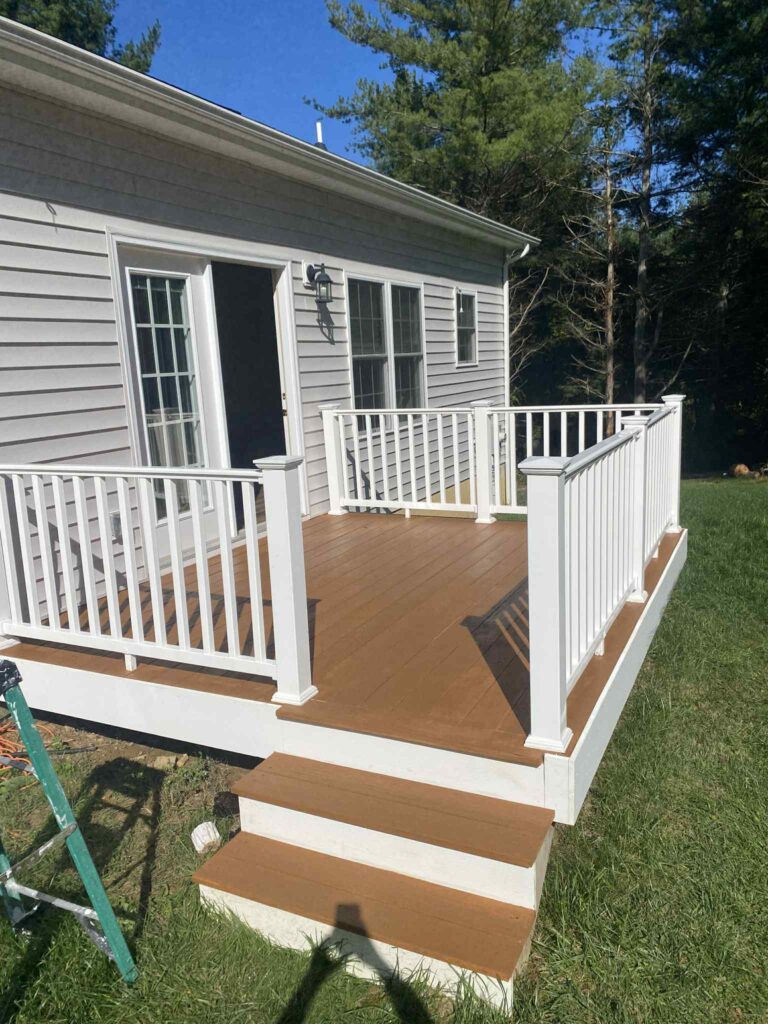
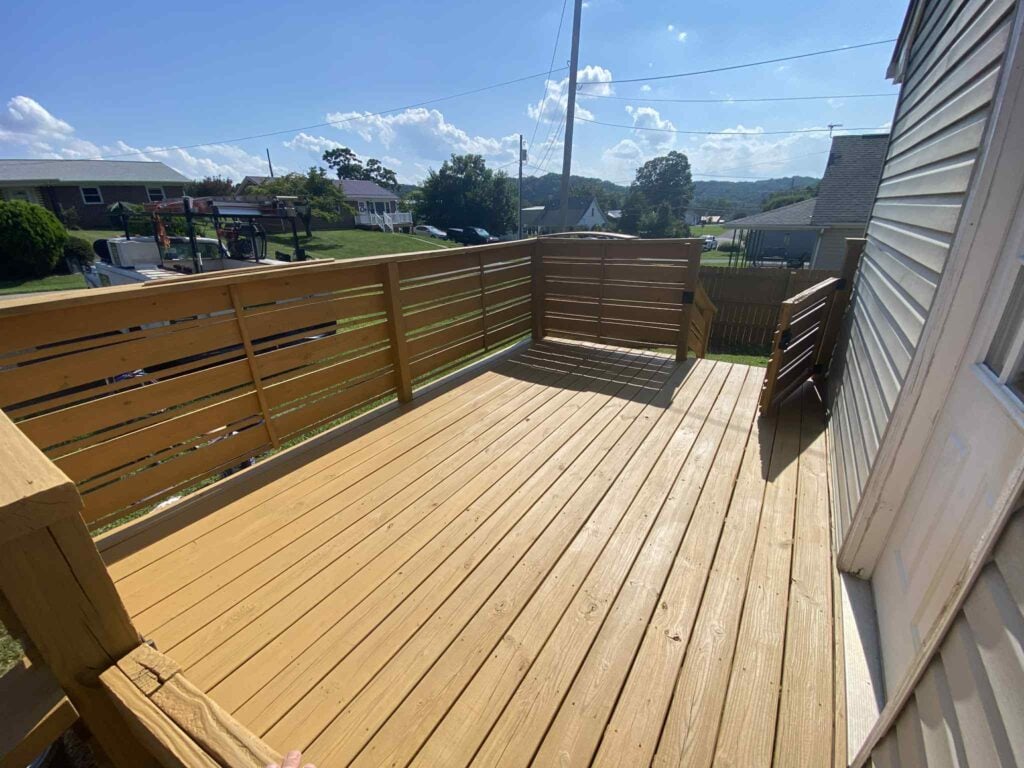
Wood decks and fences need regular staining to stay protected. Our stains include UV protection and water-resistant finishes that keep your outdoor spaces looking good for years.
How Paint Protects Exterior Surfaces
Exterior paint creates a waterproof barrier between your siding and Virginia's weather. Quality exterior painting does three things:
Blocks moisture penetration. Water is the enemy. It causes wood rot, feeds mold, and freezes inside cracks to split boards apart. Paint seals the surface so water runs off instead of soaking in.
Prevents UV damage. Direct sunlight breaks down wood fibers and fades color. The pigments in exterior paint reflect UV rays and slow degradation.
Stops pest entry. Carpenter bees, termites, and other wood-boring insects look for soft, weathered wood. A hard paint surface makes entry harder and helps you spot problems early.
In Christiansburg and Blacksburg, homes face north often show paint failure first. Less sun means more moisture, more mildew, and faster breakdown. South-facing walls fade faster from UV exposure. Both need protection.
What Deck Stain Actually Does
Stain works differently than paint. Instead of sitting on top of the wood, it penetrates into the grain. For pressure-treated pine and cedar decks common in Radford and Pulaski, this matters.
Deck staining protects in two ways:
Water repellency. Quality stains contain water repellents that make moisture bead up and roll off. This is critical for horizontal surfaces like deck boards that collect rain and snow.
UV blockers. Transparent stains let wood grain show through but still contain UV inhibitors. Semi-transparent and solid stains add pigment for more protection.
Here's the thing about deck stain: it wears off from foot traffic. Paint would crack and peel under that stress. Stain just fades and needs reapplication every 2-4 years depending on sun exposure and use.
Interior Paint: More Than Just Color
Inside your home, interior painting serves different purposes than exterior work.
Moisture Control in High-Humidity Rooms
Bathrooms, kitchens, and laundry rooms in Virginia homes deal with constant moisture. The right interior paint creates a washable, mold-resistant surface. Semi-gloss and satin finishes in these rooms aren't just aesthetic choices. They're functional barriers that wipe clean and resist moisture better than flat paint.
Surface Protection and Cleanability
Kids, pets, and daily life mark up walls. Quality interior paint protects drywall and plaster from scuffs, stains, and minor impacts. It's cheaper to wipe down a painted wall than repair and repaint damaged drywall.
Air Quality Considerations
Low-VOC and zero-VOC paints matter more in Virginia's humid climate. High humidity slows paint curing, which means off-gassing lasts longer. In tight, well-insulated homes common in newer Blacksburg construction, this affects indoor air quality for weeks.
Paint and Stain Maintenance Checklist
Protection only works if you maintain it. Here's what to check:
- Inspect exterior paint annually - Look for cracking, peeling, or bare spots, especially around windows, doors, and trim
- Check deck stain every spring - Water should bead up on the surface; if it soaks in, it's time to restain
- Clean before damage starts - Soft washing removes mold and mildew before they break down paint and stain
- Address failures immediately - One small bare spot lets water in; water damage spreads fast in Virginia humidity
- Plan for 5-7 year exterior cycles - Even quality paint breaks down; budget for full repaints, not just touch-ups
- Restain decks every 2-4 years - High-traffic areas and full-sun exposure need more frequent attention
When to Paint vs. When to Stain
This comes up constantly. Here's the simple answer:
Paint for: Siding, trim, doors, railings, any vertical surface where you want a solid color and maximum protection. Paint lasts longer on vertical surfaces because water runs off instead of sitting.
Stain for: Decks, fences, natural wood siding where you want grain to show. Stain handles expansion and contraction better on horizontal surfaces and high-movement wood.
Never mix them. Don't paint over stain or stain over paint without complete removal and prep. The bond will fail.
Virginia-Specific Timing
Temperature and humidity control when paint and stain cure properly.
Best exterior painting weather: Late spring (May) and early fall (September-October). You need temperatures above 50°F and below 85°F with humidity under 70%. Summer in the New River Valley is too humid. Winter is too cold.
Best deck staining weather: Late spring after pollen season. The wood needs to be completely dry, which is hard to achieve during our humid summers. Fall works if you finish before temperatures drop below 50°F at night.
Interior painting: Year-round, but allow extra drying time in summer humidity. Run dehumidifiers and fans to speed curing.
Surface Prep Determines Longevity
This is where most DIY jobs and cheap contractors fail. Paint and stain only bond to clean, dry, properly prepared surfaces.
For exterior work, that means removing mold, mildew, dirt, and chalky old paint. Pressure washing sounds right, but too much pressure damages wood and forces water deep into siding. Soft washing services clean without damage.
For deck staining, the wood needs to be bare, dry, and lightly sanded. Any old stain, dirt, or mill glaze prevents new stain from penetrating. Half the job is prep.
For interior painting, it means patching holes, sanding rough spots, and priming stains. Skip prep and you'll see every flaw through the new paint.
The Real Cost of Skipping Protection
Unprotected wood in Virginia doesn't last. Deck boards rot from the inside out. Siding warps and splits. Trim around windows and doors lets water into wall cavities where it grows mold and rots framing.
Replacing rotted deck boards costs $15-30 per square foot. Replacing damaged siding runs $3-8 per square foot plus interior repairs if water got through. Repainting or restaining costs a fraction of that.
Protection is cheaper than replacement. Every time.
Get Your Home Protected
If your paint is failing or your deck is weathered gray, you're past due. Water is already getting in.
We handle interior painting, exterior painting, and deck staining throughout Radford, Christiansburg, Blacksburg, and Pulaski. Proper prep, quality materials, and work that lasts.
Call Trey at (540) 739-0407 or contact us here for a straight answer on what your home needs.
Ready to Get Started?
Get a free, no-obligation estimate for your project today.
