When Should You Pressure Wash Your House in Virginia?
The Problem With Virginia's Climate
Your house doesn't stay clean in Virginia. Between the humidity rolling off the Blue Ridge, spring pollen that coats everything yellow, and the mildew that loves our wet summers, exterior surfaces take a beating. Wait too long between cleanings and you're not just dealing with dirt anymore. You're looking at algae, mold, and stains that work their way into your siding.
The question isn't whether you need to pressure wash. It's when.
Before & After: Real Results in the New River Valley
Take a look at what Virginia humidity does to a home — and what a proper pressure wash can fix.
Before: Green algae and grime buildup along the siding and foundation.


After: Clean siding, restored curb appeal, no damage to the surface.


Best Times for Pressure Washing in Virginia
Spring (April-May)
This is prime time for house washing in the New River Valley. You've made it through winter, the pollen apocalypse is wrapping up, and temperatures are steady enough that water won't freeze on your siding.
Spring cleaning makes sense because:
- You're removing winter grime and salt residue before it bakes on in summer heat
- Pollen has mostly finished its annual assault
- Mild temperatures mean surfaces dry properly without flash-drying (which can leave streaks)
- You're getting ahead of the mold and mildew that explodes in Virginia summers
In Blacksburg and Christiansburg, wait until nighttime temps stay above 50°F consistently. Washing when it's too cold means longer dry times and potential freeze issues if you're working early morning or late evening.
Fall (September-October)
Second-best window for soft washing services in our area. You're clearing off summer growth before winter, and you're doing it before leaves start falling and sticking to wet surfaces.
Fall washing handles:
- Algae and mildew that built up through humid summer months
- Dirt and organic matter before it sits through winter freeze-thaw cycles
- Wasp nests and spider webs before they become winter housing for pests
In Radford and Pulaski, try to finish exterior work before mid-October. After that, you're racing daylight and dropping temperatures.
Summer (June-August)
Not ideal, but sometimes necessary. If you're preparing to paint or if mold growth is getting out of hand, don't wait.
Summer challenges:
- Surfaces dry too fast in direct sun, leaving soap residue or streaks
- You're fighting active mold growth (it comes back faster in humidity)
- It's miserable work in 90°F heat
If you're washing in summer, work early morning or late afternoon. Avoid midday sun hitting wet siding.
Winter (November-March)
Generally a bad idea in the New River Valley. Freezing temperatures, shorter days, and the risk of ice formation make this the wrong season for exterior house washing.
Only exception: unusually warm stretches (60°F+) and you've got urgent mold issues or you're prepping for winter exterior painting during a warm spell.
How Often Should You Pressure Wash in Virginia?
Standard schedule: Once per year for most homes in our service area.
But that changes based on:
- Your home's location: Houses near wooded areas or with poor drainage need washing more often. Trees mean more organic debris, shade means more moisture, moisture means more mold.
- Siding type: Vinyl shows dirt faster. Brick holds onto organic growth. Hardie board is tough but still needs regular cleaning.
- Sun exposure: North-facing walls that never see direct sun? They're mold magnets in Virginia humidity. You might need spot treatments between full washes.
- Nearby traffic: Houses on busy roads accumulate exhaust residue faster.
Every 6 months if you have:
- Significant tree cover
- Persistent mold or algae problems
- Light-colored siding that shows every speck
- Plans to sell (curb appeal matters)
Signs You Need to Pressure Wash Now
Don't just go by the calendar. Your house will tell you when it needs cleaning:
- Green or black streaks on siding (algae and mold)
- Chalky residue when you run your hand across siding
- Visible dirt lines at lap joints or corners
- Cobwebs and wasp nests around eaves and corners
- Discoloration that makes your house look older than it is
- Musty smell near exterior walls (sign of mold growth)
If you're seeing any of these in Christiansburg, Blacksburg, or anywhere in the New River Valley, you're overdue.
Pressure Washing vs. Soft Washing: What Virginia Homes Need
Most residential exteriors don't need high-pressure washing. They need soft washing.
Here's the difference:
Pressure washing uses high PSI to blast away dirt. Good for concrete, brick pavers, and tough surfaces. Risky for vinyl siding, wood, and anything with seams or joints. Too much pressure drives water behind siding or strips paint.
Soft washing uses low pressure and cleaning solutions to kill mold, algae, and organic growth at the source. The chemicals do the work, not the pressure. This is what most houses need.
For vinyl-sided homes (most of what we see in Radford and Pulaski), soft washing is the right call. It cleans without risking water intrusion or surface damage.
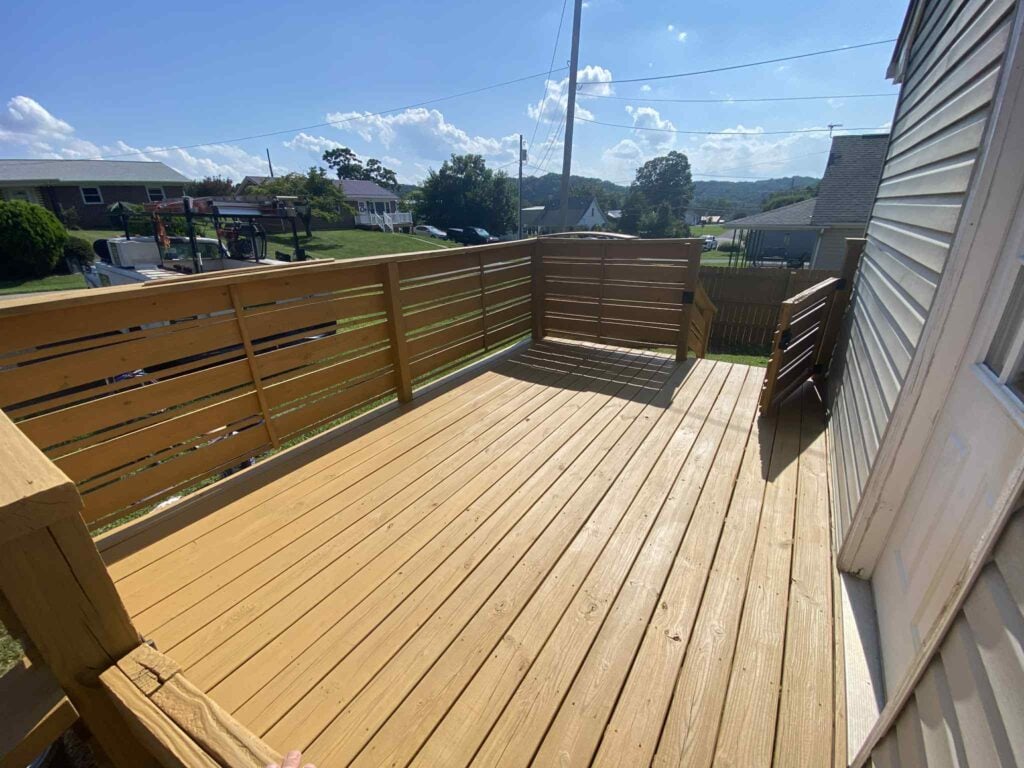
If you're also dealing with a grimy deck, that's different. Deck staining prep requires proper pressure washing to open wood pores and remove old stain.
What Happens If You Skip Pressure Washing?
Nothing catastrophic happens overnight. But:
- Mold and mildew spread: What starts as a small patch becomes whole walls. In Virginia humidity, this happens fast.
- Siding degrades faster: Organic growth holds moisture against surfaces, accelerating rot and deterioration.
- Curb appeal tanks: A dirty house looks neglected, even if everything else is maintained.
- Paint fails sooner: If you're planning interior painting or exterior work, dirty surfaces mean poor paint adhesion.
Regular washing isn't cosmetic. It's maintenance that extends the life of your siding and paint.
DIY vs. Professional Pressure Washing
You can rent a pressure washer. Whether you should is a different question.
DIY works if:
- You've got a single-story house
- You understand PSI settings for different surfaces
- You're comfortable on ladders
- You know which cleaning solutions to use (and which damage plants)
Call a pro if:
- You've got a two-story home
- You've never pressure washed before (learning curve is expensive when you're aiming at your own siding)
- You don't want to spend a weekend doing this
- You've got delicate surfaces or old paint
We see a lot of DIY damage in the New River Valley. Blown-out siding seams, stripped paint, and water intrusion from too much pressure. A rental machine and a YouTube video don't replace experience.
If you want to understand what equipment you'd need, check out our pressure washer calculator to see the specs required for different jobs.
Bottom Line for New River Valley Homeowners
Best time for pressure washing Virginia homes: late spring (April-May) or early fall (September-October).
How often: Once per year minimum, more if you've got heavy tree cover or persistent mold.
Method: Soft washing for most siding types, pressure washing for concrete and masonry.
Virginia's climate doesn't do your house any favors. Regular washing isn't optional if you want your exterior to last.
Need your house washed in Radford, Christiansburg, Blacksburg, or Pulaski? We handle soft washing and pressure washing throughout the New River Valley. Call Trey at (540) 739-0407 or visit our contact page to schedule.
Ready to Get Started?
Get a free, no-obligation estimate for your project today.